

In child welfare, many supervisors step into leadership roles because they were exceptional social workers. They managed complex caseloads, built trusting relationships with children and families, and developed deep expertise in policy, practice, and community resources. Along the way, they became known as dependable, knowledgeable professionals whose commitment to serving families consistently set them apart.
When a supervisory position opens, promoting a high-performing social worker often feels like the natural next step. And in many ways, it is. Organizations should recognize and reward talented workers whose expertise, commitment, and effectiveness have made a meaningful difference for children and families.
The transition from frontline practice to supervision, however, involves a fundamental shift in responsibilities. Success is no longer defined by managing a personal caseload, but by leading, developing, and supporting a team to achieve strong outcomes across the organization.
The success of a social work is often measured by their ability to engage families, solve problems, coordinate services, and advocate for children. The success of a supervisor is measured differently--their impact is no longer limited to the work they do themselves, and instead is reflected in the performance, growth, and wellbeing of the people they lead.
That transition is not easy.
Many new supervisors quickly discover that their challenges have less to do with child welfare practice and more to do with leading people. They may find themselves supervising former peers, navigating conflict between team members, coaching struggling employees, managing diverse personalities and work styles, and supporting staff experiencing burnout and secondary traumatic stress. At the same time, they must navigate overwhelming workloads while balancing empathy and accountability, two qualities that are equally essential to effective child welfare leadership. These responsibilities require them to lead difficult conversations and manage complex interpersonal dynamics that were rarely part of their role as frontline social workers.
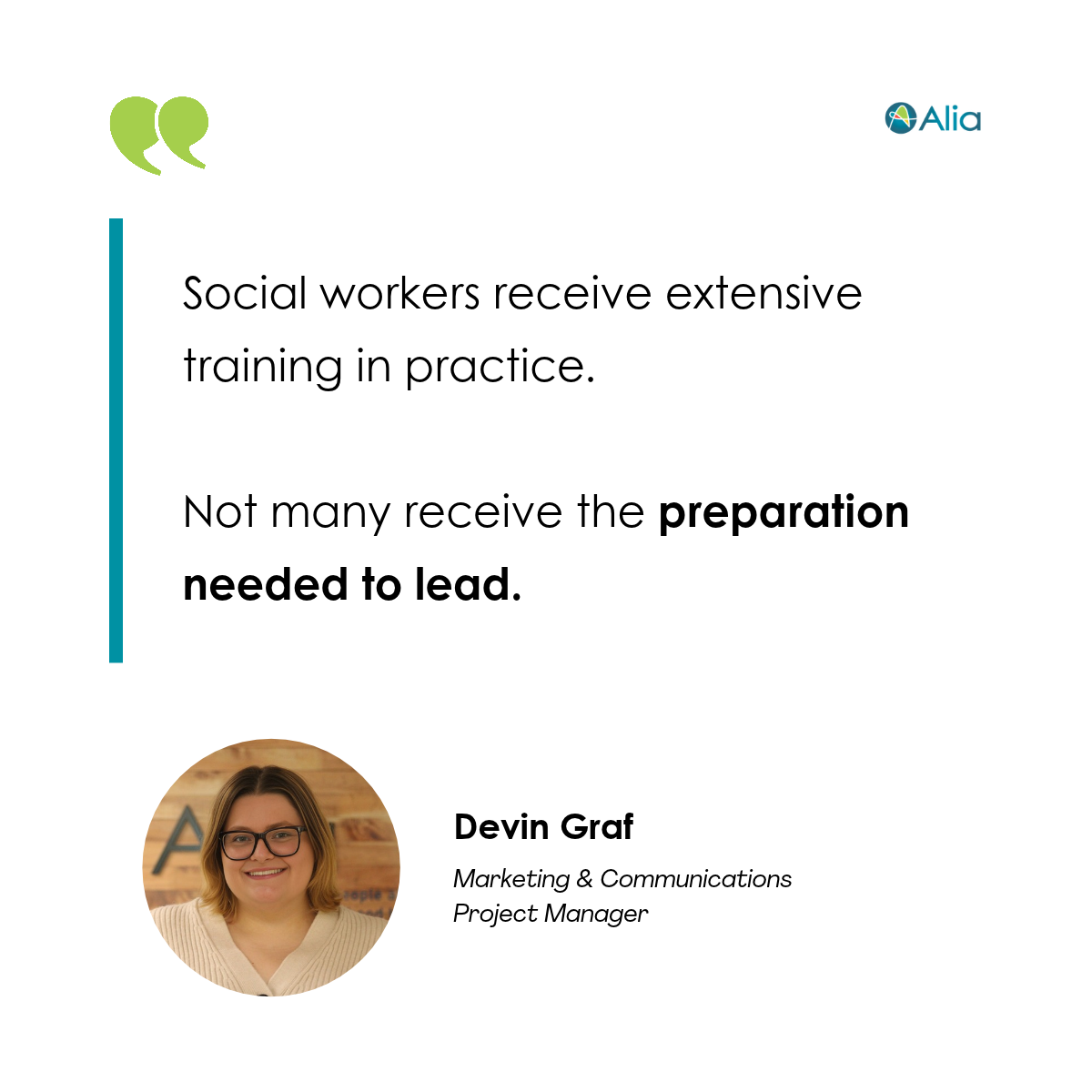
The challenge is that while social workers typically receive extensive training in direct practice, leadership preparation for supervisors is often limited or nonexistent. They learn assessment, documentation, crisis intervention, engagement strategies, and policy requirements, yet few receive meaningful guidance on leading and developing others.
As a result, supervisors are frequently confronted with situations they have never been formally prepared to navigate. They must address behaviors that undermine team effectiveness, provide candid yet constructive feedback, and manage the tension between supporting struggling employees and maintaining clear performance expectations. These are not practice challenges; they are leadership challenges.
In the absence of formal leadership training, many supervisors naturally rely on the strengths that made them successful social workers. They listen carefully, build relationships, demonstrate empathy, and approach challenges with a genuine desire to help. Those qualities remain invaluable, but leadership requires an expanded skill set. There are moments when support must be paired with clarity, directness, and accountability. For individuals drawn to child welfare because of their commitment to helping others, those moments can be particularly difficult.
This is why leadership development is so critical during the transition from social worker to supervisor. Effective supervision is not an innate talent but a skill that is cultivated through reflection, feedback, practice, and ongoing support. Leaders need opportunities to work through complex situations, challenge their assumptions, build self-awareness, and strengthen their confidence in navigating conversations that rarely have simple answers.
The most successful supervisors are not necessarily those who have all the answers. Rather, they are leaders who remain curious, seek diverse perspectives, and continue investing in their growth long after they have been promoted.
Child welfare organizations depend on this development. The quality of supervision influences employee engagement, retention, workplace culture, and ultimately the quality of services provided to children and families. When supervisors are equipped with strong leadership skills, the impact extends well beyond the individual leader, creating healthier teams, stronger organizations, and better outcomes for the communities they serve.
Exceptional social workers bring tremendous strengths to leadership roles. Their compassion, commitment, and understanding of the work provide a powerful foundation. But a foundation alone is not the finished structure. The most effective supervisors intentionally develop the skills required to lead, support, and grow others.
Great social workers do not automatically become great supervisors. With the right support, however, they absolutely can.